What Happens When You Call a Desentupidora em Aricanduva São Paulo SP?
What Happens When You Call a Desentupidora em Aricanduva São Paulo SP?
It’s 7:40 on a Monday morning, the kitchen sink is backing up, the laundry drain is gurgling, and you’re already late. You need someone who can actually show up, find the real blockage, and clear it before the neighbors start complaining. That’s the moment most people start searching for a desentupidora em Aricanduva São Paulo SP, and it’s also the moment when a rushed choice can turn a small clog into a flooded apartment.
I spent a few weeks comparing how these calls actually play out in Aricanduva — the arrival, the diagnosis, the equipment, the invoice. What follows is a day-in-the-life account of using the service, written the way an analyst would compare alternatives: numbered steps, what to watch at each one, and a closing checklist you can keep on your phone.
Step by step: what a real service day looks like
The first thing to understand is that a drain emergency is never just about the drain. In a dense district like Aricanduva, with mixed residential buildings, ground-floor shops and older pipework, the blockage is usually a symptom of something structural — grease buildup, root intrusion, a collapsed section, or a shared line that serves several units. The company you call is really being asked to diagnose that structure under time pressure.
Step 1 — You describe the symptom, not the cause
When you call, the dispatcher will ask what is backing up, where, and for how long. Say “the shower drain in the second bathroom” rather than “the pipes are broken,” because the technician builds a first hypothesis from your description. Mention any recent work — a renovation, a new washing machine, a building-wide plumbing repair — since those details change the likely culprit. If more than one fixture is affected, say so immediately; multiple backups usually point to a main line rather than a single trap.
This is also when you confirm the basics: whether the team covers your street, whether there is an emergency call-out fee, and how payment works. A reliable desentupidora Aricanduva will give you a clear arrival window and a price range before anyone leaves the base.
Step 2 — Arrival and a visual inspection
A professional crew arrives uniformed, with the equipment already loaded, and starts by looking rather than drilling. They check the affected fixtures, look for water marks on walls and floors, and ask whether the building has a grease trap or a septic system. In older Aricanduva buildings, the inspection often reveals that the original cast-iron or PVC line has been patched several times, which matters for how aggressive the cleaning can be.
Watch for this: a crew that skips the inspection and goes straight to a plunger or a hand auger is guessing. Good technicians explain what they see before they touch anything, and they tell you whether the problem looks local or building-wide.
Step 3 — Choosing the right method for the blockage
Not every clog responds to the same tool, and the choice is where experience shows. A simple sink blockage might yield to a manual snake; grease in a kitchen line usually needs hot-water jetting; a main sewer line with roots or hardened sediment needs hydrojetting at controlled pressure. The technician should match the method to the pipe material and the blockage type, not to whatever tool is closest.
Ask which method is being used and why. If the answer is vague, that is a warning sign. The best crews carry more than one option on the truck precisely because Aricanduva’s building stock is so varied — from post-war houses to tall condominiums with long horizontal runs.
Step 4 — The actual clearing and the mess question
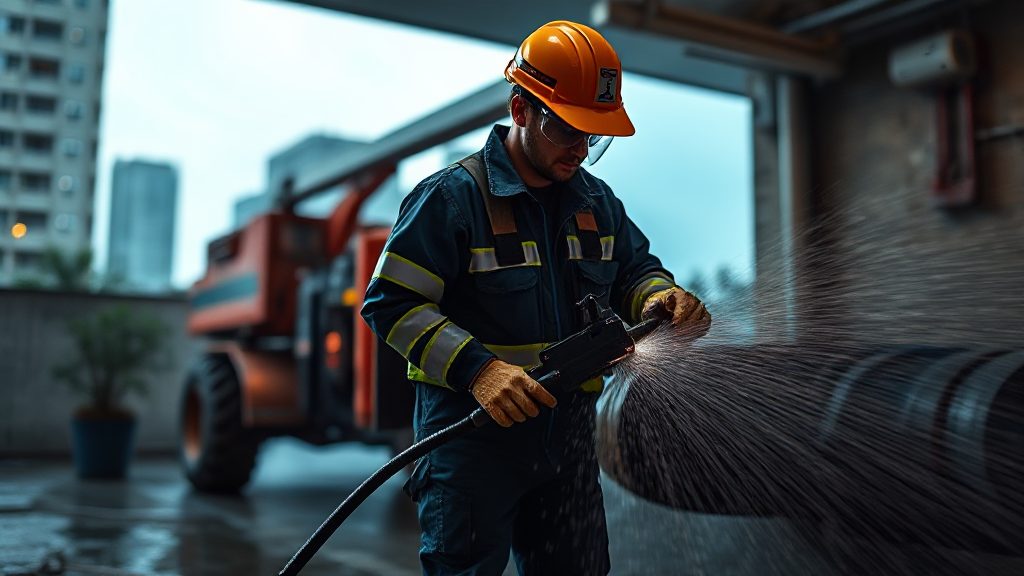
Clearing a drain is physical work, and a real service day includes protecting the area first: floor coverings, containment around the work zone, and a plan for where the dislodged material goes. This is the part most people underestimate. A blockage that has been building for months releases grease, sediment and sometimes unpleasant odors, and a crew that doesn’t manage containment leaves you with a second cleanup job.
During the clearing, the technician should narrate what is happening — how much resistance there was, what came out, whether the flow is fully restored. That narration is your evidence that the job is done, not just attempted.
Step 5 — Verification and a look at the cause
After the line is open, the crew should run water through every affected fixture and confirm the flow is normal. Then comes the part that separates a quick fix from a real service: a short explanation of why it happened. If the cause is grease, you get advice on traps and disposal. If it’s roots or a damaged section, you get a recommendation for camera inspection or repair. If it’s a shared building line, you get guidance on talking to the condominium administration.
This is where the analyst in me pays attention. A company that only clears and leaves is selling you a repeat visit. A company that explains the cause is selling you a solution.
Step 6 — The invoice and what should be on it
Before the crew leaves, confirm the invoice matches what was quoted. It should list the service performed, the method used, any additional parts or access work, and the call-out charge if one applies. Ask for a receipt and keep it — if the same line backs up again within a short period, that document is your leverage for a return visit or a warranty claim.
Compare this with the alternatives you might have considered: a handyman with a plunger (cheap, but no guarantee and no equipment for main lines), a general plumber (good for repairs, not always equipped for heavy jetting), or a dedicated drain company (broader equipment, faster response, clearer pricing). For an emergency in Aricanduva, the dedicated company usually wins on time and on the range of problems it can actually solve.
What separates a good call from a bad one
Having compared several options, the differences that matter are rarely about price alone. They show up in how the company handles the first ten minutes of the call and the last ten minutes on site. Here is what I would weigh if I were choosing again.
Response time in a dense district
Aricanduva sits at a busy junction of major avenues, and traffic can turn a fifteen-minute drive into forty. A company that knows the district will give a realistic window rather than an optimistic one. Emergency availability matters most when the backup is in a commercial kitchen or a ground-floor shop, where every hour closed is money lost. Confirm whether the team operates at night and on weekends before you need them.
Equipment on the truck, not at the depot
The single biggest predictor of a one-visit fix is whether the right equipment arrives with the crew. Hydrojetting units, camera inspection tools and heavy-duty augers are not things you can fetch mid-job without losing hours. Ask, when you call, whether the truck carries jetting equipment. A desentupidora Aricanduva São Paulo SP that answers yes is telling you it can handle main lines, not just sinks.
Transparent pricing before the work starts
Drain work is one of those services where the final bill can drift if the scope is vague. A professional company quotes a range, explains what could change it (access difficulty, additional lines, parts), and gets your agreement before proceeding. Be wary of any crew that starts work without a price and only discusses money at the end.
Cleanliness and respect for the property
You are letting strangers into your home or building during a stressful moment. Uniforms, floor protection, shoe covers and a clear cleanup routine are not luxuries — they are the baseline of a professional service. In condominiums, the crew should also coordinate with the doorman or administrator so residents know what is happening and why the water may be off briefly.
Follow-up and prevention advice
The best outcome of an emergency call is that you never need the same call again. A company that offers a brief prevention plan — periodic jetting for kitchen lines, grease trap maintenance, avoiding flushable wipes, watching for slow drains as an early warning — is treating you as a long-term customer rather than a one-off job.
The closing checklist before you dial
Keep this list handy. It is the distilled version of everything above, written for the moment you are standing in a puddle with your phone in your hand.
- Identify the affected fixtures — one drain or several? Multiple backups suggest a main line.
- Note recent changes — renovations, new appliances, building repairs.
- Ask for a realistic arrival window and confirm emergency availability.
- Confirm the price range and call-out fee before the crew leaves the base.
- Ask whether the truck carries hydrojetting and camera equipment.
- Expect a visual inspection before any work begins.
- Watch for containment and floor protection — a clean job is a professional job.
- Require a flow test on every affected fixture after clearing.
- Get the cause explained, not just the blockage removed.
- Keep the invoice and confirm what warranty or return policy applies.
The day-in-the-life view is simple: a drain emergency in Aricanduva is a test of response time, equipment and honesty. The company that shows up prepared, explains what it finds, protects your property and tells you how to avoid the next call is the one worth keeping in your contacts. The rest are just people with a plunger.